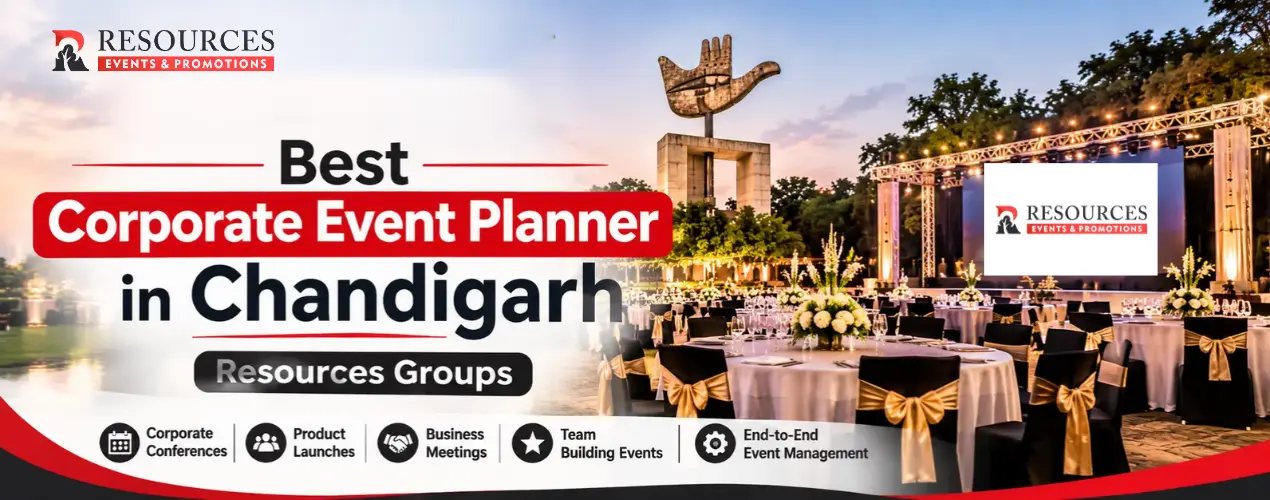
Planning a corporate event involves much more than selecting a venue and inviting guests. Every successful business event requires clear objectives, thoughtful planning, professional coordination, and attention to detail. Whether it is a corporate conference, annual celebration, product launch, business meeting, employee engagement activity, or brand promotion, the quality of event management plays an important role in creating the right impression.
For businesses looking for the Best Corporate Event Planner in Chandigarh, choosing an experienced event management partner can make the entire process more organised and effective. From understanding the purpose of an event to managing its execution, the right planner helps businesses deliver professional experiences that reflect their brand identity.
Resources Groups provides event planning and management solutions designed around business requirements, event objectives, and audience expectations. This guide explains what businesses should consider when planning a corporate event and how the right event management partner can help bring an idea to life.
Why Do Businesses Need a Professional Corporate Event Planner in Chandigarh?
Corporate events represent a company’s identity, values, and professional standards. A well-planned event can strengthen business relationships, encourage employee participation, introduce a product, or create networking opportunities.
However, managing an event internally can involve several responsibilities, including venue coordination, vendor management, branding, technical arrangements, guest communication, and event-day operations.
Working with a professional corporate event planner helps businesses manage these responsibilities through a coordinated approach.
Some important benefits include:
- Better organisation: A structured plan helps keep event activities, responsibilities, and timelines on track.
- Professional presentation: Appropriate décor, branding, stage design, and technical arrangements create a consistent brand experience.
- Time management: Businesses can focus on their core responsibilities while event-related activities are coordinated by the planning team.
- Vendor coordination: Managing venues, production teams, caterers, and other service providers becomes more streamlined.
- Guest experience: Thoughtful arrangements help attendees feel comfortable and engaged throughout the event.
- Smooth execution: Planning and on-site coordination help address operational challenges.
A corporate event should not simply look impressive. It should serve a clear purpose and create value for the organisation.
What Services Should the Best Corporate Event Planner in Chandigarh Offer?
Corporate events differ in size, format, audience, and purpose. Therefore, businesses should look for an event management company that understands different event requirements and can coordinate the essential elements under one plan.
1. Corporate Conferences and Seminars
Conferences and seminars provide opportunities for businesses to share knowledge, discuss industry developments, introduce ideas, and connect with professionals.
Planning these events requires attention to seating arrangements, registration, stage setup, presentation equipment, audio-visual systems, speaker coordination, and attendee management.
A professional planning team helps ensure that the event schedule and technical arrangements support the programme.
2. Product Launches and Brand Activations
A product launch is an opportunity to introduce a new product or service to customers, business partners, media representatives, and other relevant audiences.
The event should communicate the product’s identity and key message clearly. Stage design, product displays, branding, presentations, audience engagement, and promotional activities all contribute to the overall experience.
Brand activations also require creative planning to encourage interaction between the brand and its target audience.
3. Annual Corporate Events and Award Ceremonies
Annual celebrations and award functions recognise employee contributions, celebrate business achievements, and bring teams together.
These events may include entertainment, presentations, recognition ceremonies, performances, hospitality arrangements, and interactive activities.
The planning approach should reflect the company’s culture while ensuring that the programme remains organised and engaging.
4. Corporate Meetings and Business Gatherings
Business meetings, leadership gatherings, dealer meets, and partner conferences require a professional environment where communication and interaction remain the priority.
Important planning elements may include venue selection, seating layouts, presentation facilities, refreshments, guest coordination, and scheduling.
A well-managed business gathering allows participants to concentrate on the discussions and objectives of the event.
5. Exhibitions and Stall Fabrication
Exhibitions allow companies to present their products, services, and capabilities to potential customers and business partners.
A successful exhibition presence requires more than an attractive stall. The layout should support visitor movement, product demonstrations, brand visibility, and meaningful conversations.
Planning may include stall design, fabrication, graphics, lighting, display arrangements, and on-site coordination.
6. Corporate Retreats and Offsite Events
Corporate retreats and offsite programmes provide teams with opportunities to connect outside the regular workplace.
These events may include team-building activities, leadership sessions, employee engagement programmes, recreational experiences, and business discussions.
The event format should be selected according to the organisation’s goals, participant profile, and available time.
7. MICE and Corporate Travel Events
MICE refers to Meetings, Incentives, Conferences, and Exhibitions. These programmes often involve multiple arrangements, such as accommodation, transportation, venue coordination, schedules, and participant management.
Careful coordination is important because several activities may take place across different locations or over multiple days.
How to Choose the Best Corporate Event Planner in Chandigarh
Selecting an event management company is an important business decision. The right partner should understand your objectives, communicate clearly, and provide a practical approach to planning and execution.
Before finalising an event planner, consider the following factors.
1. Understand Their Event Planning Experience
Ask about the types of corporate events the company handles. Experience with conferences, product launches, exhibitions, annual functions, and employee engagement programmes can help you understand whether the team is suitable for your requirements.
Look for relevant examples, event photographs, case studies, or client feedback where available.
2. Check Their Range of Services
Some events require only basic coordination, while others involve production, branding, entertainment, fabrication, and hospitality.
Choosing a planner that can coordinate multiple event requirements may simplify communication and reduce the need to manage several separate vendors.
3. Evaluate Creativity and Practical Planning
Creative ideas are valuable, but they must also be realistic within the available budget, venue, schedule, and technical requirements.
Discuss your expectations and understand how the planner proposes to translate your event concept into an executable plan.
4. Discuss Budget and Cost Transparency
A professional event proposal should clearly explain the services included in the quotation.
Ask for details about vendor costs, production requirements, venue charges, taxes, payment schedules, and possible additional expenses. Clear communication about the budget helps avoid misunderstandings during execution.
5. Understand Their On-Site Coordination Process
Event-day coordination is just as important as preparation. Confirm who will manage vendors, technical teams, guest movement, programme timing, and unexpected issues during the event.
A clearly defined coordination structure helps everyone understand their responsibilities.
6. Review Communication and Responsiveness
Corporate events involve decisions from different stakeholders. An event planner should be able to understand feedback, share updates, communicate changes, and provide clarity throughout the planning process.
Good communication supports better decision-making and smoother execution.
What Should a Corporate Event Budget Include?
A corporate event budget depends on the event format, number of attendees, venue, duration, and production requirements. Businesses should identify the major cost areas before confirming the event plan.
Common budget components include:
- Venue: Venue rental, seating arrangements, and related facilities.
- Event production: Stage setup, sound systems, lighting, LED screens, and technical equipment.
- Branding: Backdrops, standees, signage, printed materials, and branded displays.
- Hospitality: Catering, refreshments, guest services, and accommodation where required.
- Entertainment: Hosts, performers, activities, and other programme elements.
- Logistics: Transportation, material movement, equipment handling, and coordination.
- Staffing: Event managers, registration teams, technical staff, and support personnel.
- Photography and videography: Professional event coverage and documentation.
- Contingency: An allowance for unexpected requirements or last-minute changes.
Before approving a proposal, ask the event planner to clarify what is included and excluded, applicable taxes, payment schedules, and any additional charges that may arise.
Why Chandigarh Is a Practical Location for Corporate Events
Chandigarh offers businesses a convenient setting for conferences, meetings, corporate celebrations, exhibitions, and professional gatherings. Its location also makes it relevant for organisations inviting participants from nearby areas such as Mohali, Panchkula, Zirakpur, and other parts of the Tricity region.
When planning a corporate event in Chandigarh, businesses should consider:
- Accessibility for employees, clients, speakers, and guests.
- Venue capacity and suitability for the event format.
- Parking and transportation arrangements.
- Accommodation requirements for outstation participants.
- Availability of technical and production facilities.
- Local logistics and event setup timelines.
The best venue is not necessarily the largest or most expensive one. It is the venue that supports the event’s purpose, audience, and operational requirements.
How Resources Groups Approaches Corporate Event Planning
Every corporate event has a different objective. A product launch requires a different approach from an annual celebration, while a business conference has different operational priorities from an employee engagement programme.
Resources Groups focuses on understanding these requirements before developing an event plan. The planning process should connect the client’s objectives with the practical arrangements needed to deliver the event.
Key areas of corporate event planning include:
Understanding Business Objectives
The first step is to understand why the organisation is hosting the event. The objective may be to introduce a product, communicate business updates, recognise employees, build relationships, or create brand awareness.
This understanding helps guide decisions about the event format, audience, programme, and overall experience.
Developing the Event Concept
Once the objectives are clear, the event concept can be developed around the company’s brand identity and expectations.
This may involve selecting a theme, planning the programme, deciding on the stage design, and identifying suitable audience engagement activities.
Coordinating Event Requirements
An event involves several interconnected arrangements. These may include venue selection, production, branding, hospitality, entertainment, logistics, and vendor coordination.
A coordinated plan helps ensure that these elements work together rather than operating as separate activities.
Managing Event-Day Execution
On the day of the event, the focus shifts to coordination and implementation. The schedule, technical arrangements, guest movement, programme activities, and vendor responsibilities need to be monitored.
Effective on-site management helps the event progress according to the planned schedule.
Businesses interested in learning more about the company’s services can visit the official Resources Groups website.
Common Corporate Event Planning Mistakes to Avoid
Even a well-intentioned event can face difficulties if important details are overlooked. Businesses can reduce the risk of last-minute problems by addressing common planning mistakes early.
Starting the Planning Process Too Late
Delaying venue selection, vendor confirmation, or production planning can limit available choices and increase pressure on the organising team.
Start planning early, especially when the event involves a large audience, multiple speakers, or extensive technical arrangements.
Not Defining the Event Objective
An event without a clear purpose can become focused on arrangements rather than outcomes.
Identify what the organisation wants attendees to understand, experience, or do after participating.
Ignoring the Audience Experience
The event should be planned around the people attending it. Registration, seating, refreshments, accessibility, session timing, and networking opportunities all influence the attendee experience.
Underestimating Technical Requirements
Sound, lighting, screens, presentations, internet connectivity, and power arrangements should be checked in advance.
Technical rehearsals and equipment checks can help identify potential problems before guests arrive.
Not Keeping a Contingency Plan
Unexpected changes can occur during event preparation or execution. Maintaining backup arrangements for important services and allowing flexibility in the schedule can help the team respond more effectively.
How to Measure the Success of a Corporate Event
The success of a corporate event should be evaluated against its original objectives rather than appearance alone.
Depending on the event type, businesses can review:
- Attendance: Number of registered and actual attendees.
- Participation: Audience involvement in sessions, activities, or discussions.
- Business engagement: Interactions with customers, partners, employees, or potential clients.
- Feedback: Responses collected through surveys and post-event discussions.
- Brand visibility: Audience exposure to the company’s message, products, or services.
- Budget performance: Comparison between planned and actual expenditure.
- Objective achievement: Whether the event delivered the outcomes identified during the planning stage.
A post-event review can help organisations understand what worked well and what could be improved for future programmes.
Frequently Asked Questions
1. How do I choose the best corporate event planner in Chandigarh?
Start by reviewing the company’s experience with corporate events, range of services, planning process, communication, and event portfolio. Discuss your objectives and budget before making a decision.
2. What types of corporate events can an event management company organise?
Corporate event management services may include conferences, seminars, product launches, annual celebrations, award ceremonies, exhibitions, dealer meets, employee engagement programmes, corporate retreats, and MICE events.
3. How early should I book a corporate event planner?
The booking timeline depends on the event’s size, complexity, venue requirements, and number of participants. It is advisable to begin discussions as early as possible so that the planning team has sufficient time to coordinate the arrangements.
4. What information should I share before requesting a corporate event proposal?
Share the event date or preferred dates, estimated number of attendees, event location, purpose, preferred format, expected services, and approximate budget. These details help the planner understand the requirements and prepare a more relevant proposal.
5. Can a corporate event planner manage branding and production?
Many corporate event management companies coordinate branding and production requirements such as stage design, backdrops, signage, lighting, sound, LED screens, and exhibition displays. Confirm the exact services included in the proposal before finalising the arrangement.
6. Why should businesses work with a professional event management company?
A professional event management company can help coordinate planning, vendors, logistics, production, and event-day activities. This allows the organisation to focus on its business objectives while the event requirements are managed through a structured process.
Conclusion: Plan Your Next Corporate Event with Resources Groups
A successful corporate event begins with a clear objective and depends on careful planning, professional coordination, and consistent execution. From conferences and product launches to annual celebrations, exhibitions, and employee engagement programmes, every event needs an approach that matches the organisation’s requirements.
Choosing the Best Corporate Event Planner in Chandigarh means looking beyond attractive event setups. Businesses should consider planning capabilities, service coordination, budget transparency, communication, and the ability to create an experience that supports their goals.
With its focus on event planning and management solutions, Resources Groups can be considered by businesses exploring corporate event support in Chandigarh and the Tricity region.
Planning a corporate event? Visit resourcesgroups.com to explore the services and discuss your event requirements.